Outlook • November 5, 2026
Smaller Appetites, Bigger Questions for Beef in the GLP-1 Era


Report Snapshot
Situation
GLP-1 medications are gaining adoption and reshaping consumer eating habits, with smaller appetites, fewer calories and less food-away-from-home spending.
Finding
Beef has an opportunity to defend its place as a high-quality, nutrient-dense protein for Americans turning to GLP-1 treatments. Messaging from consumer-facing outlets like grocery and club stores and all sectors of the restaurant trade will likely focus on value rather than volume through smaller portions, premium cuts and convenient formats.
Outlook
Tight cattle supplies should remain the stronger near-term price driver. Longer term, expanding GLP-1 use could provide downside risk to beef volume growth, pressure restaurant demand for beef, and intensify competition among proteins as beef supplies recover.
For decades, beef demand has been influenced by familiar factors: household income, demographics, retail prices, competing proteins, restaurant traffic, health perceptions, and consumer tastes and preferences. Now, a new, potentially game-changing factor has joined the demand conversation: GLP-1 weight loss medications such as Ozempic, Wegovy and Zepbound.
Initially developed to treat Type 2 diabetes, these drugs are now well-known for their role in weight loss, management and control. By reducing appetite, increasing feelings of fullness, and slowing digestion, GLP-1 medications can change how much people eat and how they think about food.
For the cattle and beef industry, rising GLP-1 use prompts four big questions:
- Will GLP-1 users simply eat less beef, or will they eat differently?
- Will there be enough users to influence demand?
- Will GLP-1 users change where they eat, and therefore their demand for different cuts?
- What could this mean for cattle and beef prices?
Before going further, it’s important to note that beef may be better positioned than many foods in the GLP-1 era. Why?
First, beef is protein dense. For consumers with reduced appetites, “protein efficiency” matters. A modest serving can provide a meaningful amount of high-quality protein without requiring a large meal.
Second, beef is a complete protein, meaning it contains all nine essential amino acids. That gives beef a strong role in conversations around maintaining muscle mass, healthy aging, active lifestyles and weight management.
Third, beef offers more than protein. It provides iron, zinc, vitamin B12, selenium, niacin, choline, creatine and other nutrients. These nutrients become more important when consumers are eating fewer total calories and need each meal to carry more nutritional value.
Fourth, beef delivers satisfaction. Taste, texture, aroma and satiety matter. A smaller beef portion can still feel like a complete and satisfying eating experience.
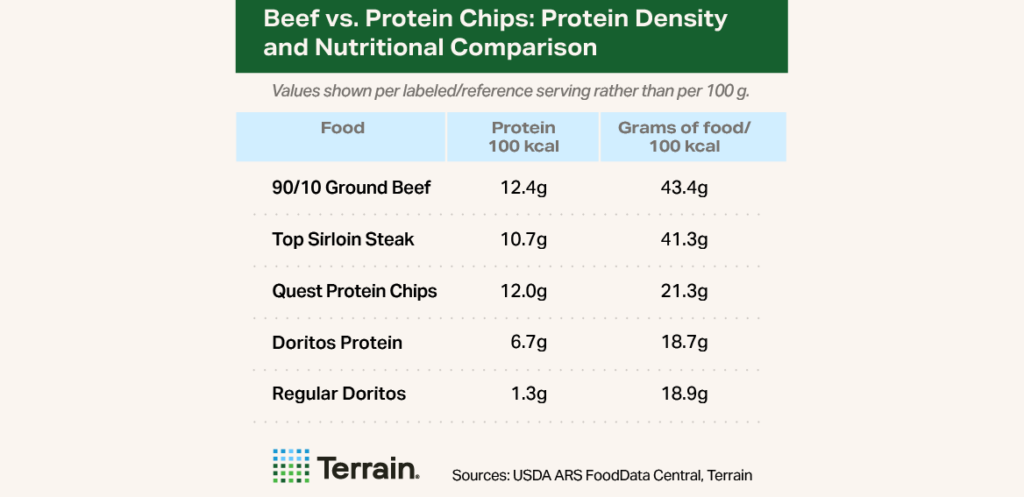
Will GLP-1 Users Eat Less Beef?
If the slice of beef consumers using GLP-1s cut consumption across all food categories equally, beef volume could face pressure. But if they mainly reduce snacks, oversized portions and some restaurant meals while still prioritizing protein, beef should stay relevant.
When it comes to overall food spending, Cornell University and research firm Numerator found that households using GLP-1 medications reduced grocery spending by about 5.3% within six months of starting, with larger declines among higher-income households and significant cuts in calorie-dense processed foods like chips and cookies and many packaged snacks. The same research showed an 8% drop in spending at fast-food chains, coffee shops and limited-service restaurants.
Early evidence on beef consumption is mixed. Some reporting suggests a meaningful share of GLP-1 users say they are eating less beef after beginning treatment. The Food Institute cited survey findings indicating that 45% of current GLP-1 users reported eating less beef than before beginning treatment.
Beef products may need to fit more occasions than the traditional dinner plate.
On the other hand, Kansas State University’s Meat Demand Monitor research suggests that GLP-1 users are still actively engaged protein consumers. The research highlights that high-protein diets may be appealing to GLP-1 users because protein can support fat loss and help preserve lean muscle mass during weight loss.
Meat Demand Monitor research also noted that GLP-1 users were much more likely than non-users to report skipping dinner, while still showing interest in protein when they did eat. That means beef products may need to fit more occasions than the traditional dinner plate. Breakfast bowls, lunch bowls, snack packs, meal-prep portions, ready-to-heat meals, and protein add-ons may all become more important. The future beef occasion may be less focused around a 12-ounce steak and include also the 4-ounce protein anchor in a balanced meal.
A promising opportunity for the beef industry may be the rapidly growing meat snack category. Dietitians and healthcare professionals are more frequently recommending protein-rich foods that can be consumed in small portions, making beef jerky, meat sticks and other beef snacks well-suited to the nutritional needs of GLP-1 users.
Consumer demand for meat snacks has grown rapidly in recent years. Industry estimates suggest that meat snack sales have risen by more than 45% over the past four years, now exceeding $4.4 billion each year. The category has attracted over $1 billion in announced processing investments since 2020, reflecting manufacturers' confidence that protein-focused snacking will be a sales growth opportunity. Major brands like Chomps, Jack Link's and Archer's have increased production capacity to meet the growing demand.
For the beef industry, this significance extends to more than just category growth. Beef snacks allow cattle producers and processors to directly engage in one of the fastest-growing segments of the food market while also meeting the nutritional needs of GLP-1 users. As meal occasions potentially become smaller and more frequent, products that deliver protein efficiently may gain market share even if total food consumption decreases.
GLP-1 adoption may reduce total food volume, but it may not reduce protein demand proportionally. Consumers may eat smaller meals or skip some eating occasions while still prioritizing foods they believe provide nutritional value. For beef, this presents an opportunity to defend its place as a high-quality, nutrient-dense protein.
Will There Be Enough GLP-1 Users to Influence Demand?
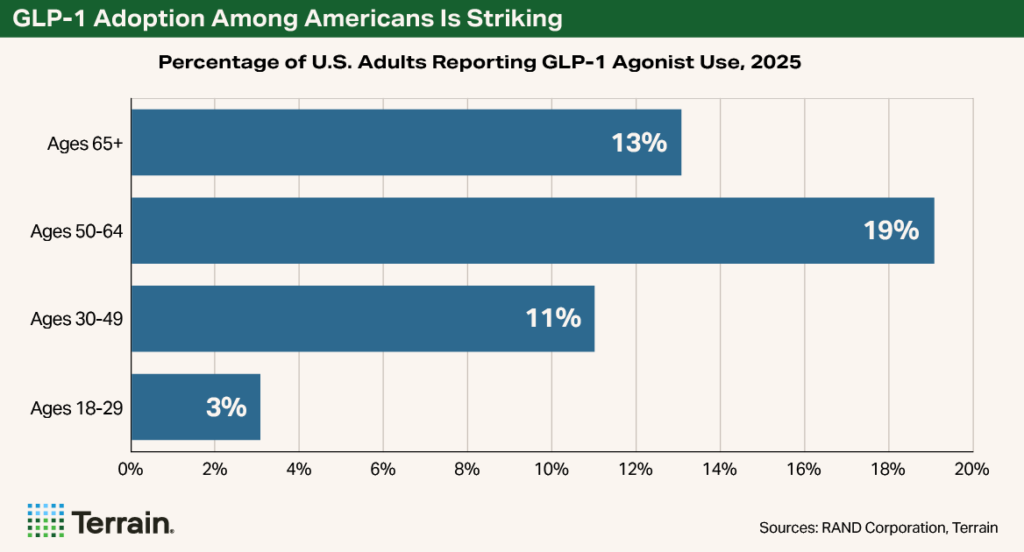
GLP-1 medications have rapidly gained popularity, with recent Gallup polling showing around 11% of U.S. adults were currently using them for weight loss and 15% have tried them. Usage rose from 3% in 2024 to 11% in 2026, and awareness now exceeds 90%, signaling their growing role in weight loss and management.
An important but often overlooked aspect of the GLP-1 market is the high start-stop rate. Research published in JAMA Network Open found that nearly 65% of GLP-1 users without diabetes discontinued therapy within a year of starting. Even among patients with diabetes, nearly half stopped treatment within the first year. Importantly, a significant number of these consumers later restarted therapy, creating a pattern of intermittent use rather than continuous treatment. Importantly, this research was conducted on users taking shots, or injection therapy, which may also contribute to the start-stop rates.
This situation can be described as a "cycling consumer." These individuals start treatment, change their eating habits; lose weight; stop medication due to cost, side effects or other reasons; regain some weight; and eventually return to treatment. Studies show that weight regained after discontinuation can be significant, with research indicating that about two-thirds of lost weight may come back within a year after stopping therapy.
Growing adoption of GLP-1s doesn't necessarily mean lower demand for all foods.
For food and agricultural markets, the cycling consumer could become a defining feature of the GLP-1 era. Instead of permanently reducing demand for specific food types, these consumers commonly create new eating habits that persist even when medication use fluctuates. Many continue to prioritize protein intake, portion control and food quality even after stopping treatment. Key implications of the cycling consumer for beef include:
- A lasting change in consumer tastes and preferences rather than a temporary shift tied only to active drug use. Once an individual starts on GLP-1s, their interaction with beef, and other foods, may change significantly regardless of future GLP-1 use.
- An interruption in traditional seasonal beef patterns. For example, demand for steaks and burgers may be interrupted during grilling season if users begin medication use at the beginning of year and continue through the traditional wedding and beach season.
For the food industry, growing adoption of GLP-1s doesn't necessarily mean lower demand for all foods. Instead, it points to a shift toward fewer total calories, smaller portions, and a greater focus on nutrient density.
Will GLP-1 Users Change Where They Eat?
GLP-1 users may still enjoy beef, but they may consume it at fewer food service occasions or in smaller portions.
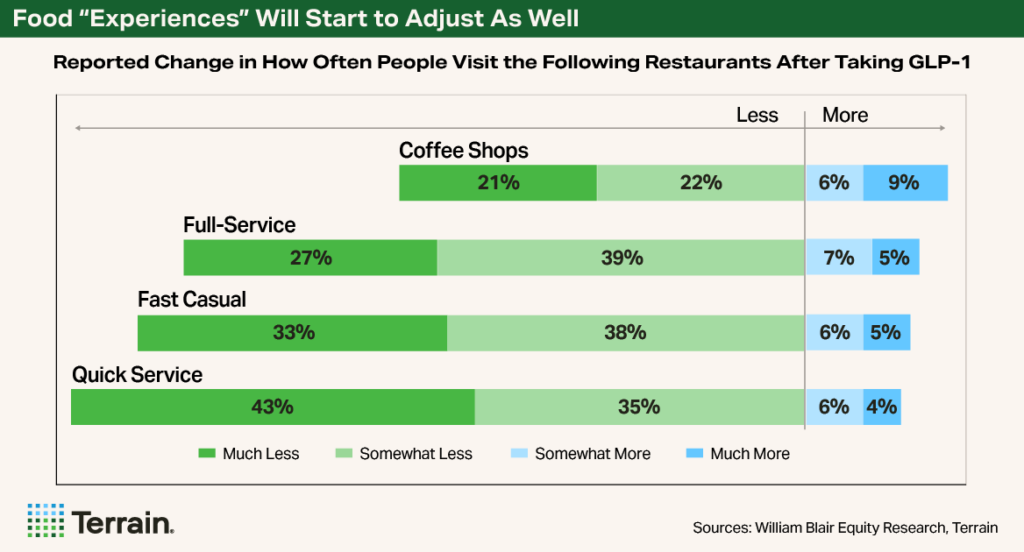
Many restaurant business models are built around larger portions, combo meals, appetizers, desserts, beverages and frequent dining occasions. The 8% decline in spending at fast food chains, coffee shops and limited-service restaurants among GLP-1 households cited by Cornell/Numerator suggests food-away-from-home spending may be particularly vulnerable.
Quick-service restaurants could face pressure on burgers, combo meals, upsized offerings and add-on purchases. Casual dining could see smaller entrées, fewer appetizers, more leftover-friendly foods, and greater interest in steak salads or protein bowls. Steakhouses may experience a more subtle shift: not necessarily fewer customers but possibly fewer ounces consumed per customer.
Ground beef may remain especially resilient because it is versatile, portion-flexible, affordable, and easy to stretch across multiple meals.
Retail grocery stores may prove more resilient. At home, consumers can better control portions, manage leftovers, plan protein intake, and reduce waste. Instead of eating one 10-ounce steak at a restaurant, a consumer may buy a steak at retail and divide it into two smaller meals. That keeps beef relevant even with consumers with reduced appetites.
Retail winners may include ground beef, smaller premium cuts, individually wrapped steaks (which are more convenient), single-serve products, beef protein bowls, ready-to-cook meals, refrigerated entrées and beef snacks. Ground beef may remain especially resilient because it is versatile, portion-flexible, affordable, and easy to stretch across multiple meals.
The move away from out-of-the-home food spending could also shift premium beef demand from restaurants to retail. Instead of spending $65 on a steakhouse dinner that a GLP-1 user may not eat all of, a consumer may spend $18-$25 on a premium steak at retail and build a smaller, high-quality meal at home.
In the near term, GLP-1 adoption is unlikely to be the dominant driver of cattle prices.
That shift has carcass value implications. Cuts tied heavily to food service (ribeyes, strip loins, tenderloins, briskets and premium burger patties) could face pressure if restaurant traffic weakens. Cuts and products with stronger retail orientation (ground beef, sirloin, chuck, meal-prep cuts, smaller steaks) may prove more resilient.
What Could This Mean for Cattle and Beef Prices?
In the near term, GLP-1 adoption is unlikely to be the dominant driver of cattle prices. Several aspects are more important: historically tight U.S. cattle supplies, multiyear herd liquidation, strong domestic beef demand, export demand, elevated production costs, and record or near-record cattle prices.
Even if GLP-1 use modestly lowers food consumption, supply constraints are likely to remain the dominant price driver over the next several years.
Over the longer term, however, GLP-1 adoption could matter more. It is likely to reduce per capita calorie consumption, encourage smaller serving sizes, reduce some food service occasions, increase demand for smaller-format retail meat products, and intensify competition from other proteins such as chicken, eggs, dairy, seafood, pork and plant-based proteins (as consumers look to keep variety in their diet). This would require beef to re-earn its place on a smaller plate even as supply of beef potentially rebounds in the next herd cycle.
The likely result is not a dramatic collapse in beef demand or prices. A more realistic risk is a slower, more differentiated growth path for beef demand, especially if GLP-1 adoption expands at the same time beef supplies recover. Importantly, this does not mean a retracement of beef demand, but rather a different path over the coming years.
My base case is a modest disruption to food service and slight demand shift toward smaller cuts and more protein. In the near term, this will have limited impact on beef prices, but over the long term it could have an impact on the value composition of the beef carcass.
Conclusion: Beef Must Re-Earn Its Place on a Smaller Plate
Changes to diets associated with GLP-1 use can become both a headwind and an opportunity for beef. If beef is framed mainly as a large steak, loaded burger or heavy restaurant meal, it may become easier for GLP-1 users to reduce their consumption. But if beef is framed as satisfying, protein-rich, nutrient-dense and portion-flexible, it becomes easier to see how beef can remain in their diets.
Beef needs to re-earn its place on the plate.
When people consume less of something, they may also become more willing to buy a better version of it. A consumer who eats a smaller steak may be more willing to purchase Prime, Certified Angus Beef, grass-fed, natural, local, branded beef, filet medallions or premium ground beef. That supports a value-over-volume strategy.
Beef needs to re-earn its place on the plate.
Historically, beef marketing has portrayed abundance: bigger steaks, backyard grilling and delicacy. Those themes will still have a place. But the smaller population of GLP-1 users may respond better to messages built around protein quality, nutrient density, satiety, convenience and satisfaction from smaller portions.
Product innovation will also matter. The strongest opportunities for this class of consumers include smaller steaks, individually wrapped cuts, smaller package sizes and beef sticks, among other items.
Near term, cattle supplies will likely matter more than GLP-1 adoption for cattle prices. Longer term, GLP-1 could become more important if it coincides with larger beef supplies, weaker restaurant traffic, stronger competition from lower-cost proteins, or greater consumer resistance to high retail beef prices.
The eventual winner in the GLP-1 era may be the protein that delivers the most nutrition, satisfaction, convenience and value in the fewest bites. Beef is well-positioned to compete for that role. But it will have to earn the occasion.


Terrain content is an exclusive offering of AgCountry Farm Credit Services, American AgCredit,
Capital Farm Credit, Farm Credit Services of America and Frontier Farm Credit.