



Unpacking Lessons From Abroad for U.S. Agriculture


By Don Close, Chief Research & Analytics Officer
I recently explored New Zealand agriculture for three weeks with an international studies group from my alma mater, West Texas A&M University. It was a fabulous experience. I also couldn’t wait 24 hours to eat a U.S. beef hamburger upon my return.
My first observation from the trip is that there are still young adults with strong work ethics and impressive skill sets. I had the privilege to travel with an ambitious group of students majoring in animal science, ag business and economics, and ag communications. I think back to my early career and how I was nowhere near as ready to enter the workforce nor as prepared for international travel as they are.
There Is No Free Lunch
My second observation is that there is no such thing as a free lunch.
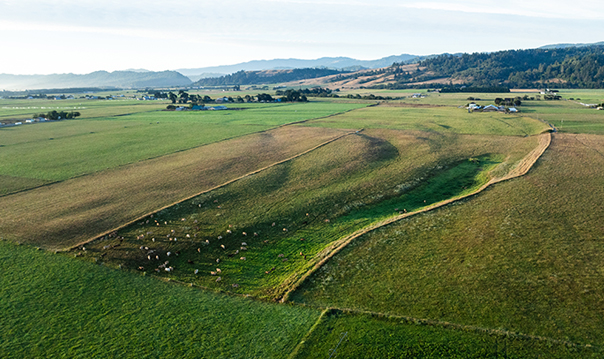
New Zealand is, in my opinion, the most beautiful country in the world. But even with year-round green grass, it requires a tremendous amount of labor and management to keep the rotational grazing programs as optimal as possible.
New Zealand’s population is approaching 5 million people, while it has 10 million cattle and 26 million sheep (down from a peak of 70 million sheep in 1982). Excluding the Merino breed, sheep herders complained that it costs more per head to shear sheep than they get for the wool.
Help the Environment, and Producers
My third observation is that the U.S. industry needs to leverage its contributions to conservation and sustainability in ways that benefit, not hamper, producers.
Exports account for 85% to 90% of New Zealand’s agricultural production. As a small country that is heavily dependent on exports, it is constantly being dragged in one direction or another by major export countries.
The EU has heavily influenced New Zealand to reduce greenhouse gas (GHG) emissions. While New Zealand is truly committed to helping improve the environment globally, industry players from across all of agriculture in New Zealand openly talk about being heavily influenced by the EU on restricting GHG emissions. At the same time, they talk about less and less trade with the EU and how their largest trading partners are now China, Southeast Asia and the U.S.
The producers we talked to in New Zealand commented that the restrictions on production, inspections and documentation all associated with sustainability and GHG emissions have placed limitations on production and profitability.
Learn a Different Approach
My fourth observation is that there are practices both New Zealand and the U.S. can learn from each other.
Many of the dairies are on surprisingly small farms divided into small paddocks. Cows are moved to new paddocks daily, on a 21-day or 24-day rotation. Many farms use electronic collars, and producers set rotation parameters on their phones. I’d be interested in learning about someone’s experience with this technology in a larger herd.
New Zealand has pockets of exceptional-quality beef cattle. Dairy calves predominantly make up its cattle supply for beef, however. The cows are what they call a Kiwi Cross, which is predominantly Friesian and Jersey.
Although New Zealand producers talked about using a natural beef-on-dairy program for their beef supply, it isn’t nearly as developed as the beef-on-dairy program underway in the States. Calves are turned out on grass as soon as they leave the nursery. Very few have any supplemental feed.
Granted, it’s been a dry spring, but I was taken aback by the quantities of fertilizer and water producers apply to achieve maximum growth of grass to support rotational grazing. The pastures are largely a ryegrass base with clover and alfalfa. They also mix in chicory for the tap root to open up the soil and prevent compaction.
Use of synthetic nitrogen has been cut way back because of environmental laws to prevent nitrogen from getting into the water supply. Producers depend on manure from the rotational grazing for their nitrogen and apply P and K.
For irrigation, instead of dropping heavy quantities periodically, producers focus on light, consistent applications of water to reduce leaching.
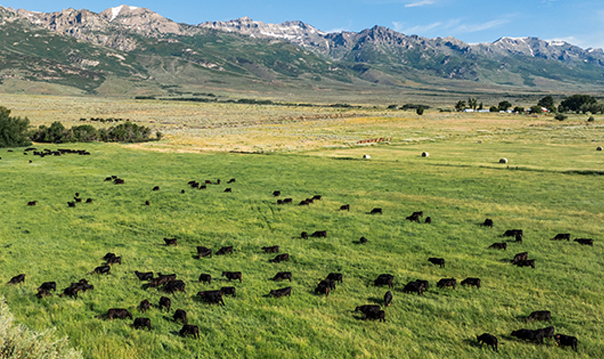
While the grass is visibly greener on the other side of the ocean, my final takeaway is that there is no place like home.
Terrain content is an exclusive offering of AgCountry Farm Credit Services,
American AgCredit, Farm Credit Services of America and Frontier Farm Credit.